
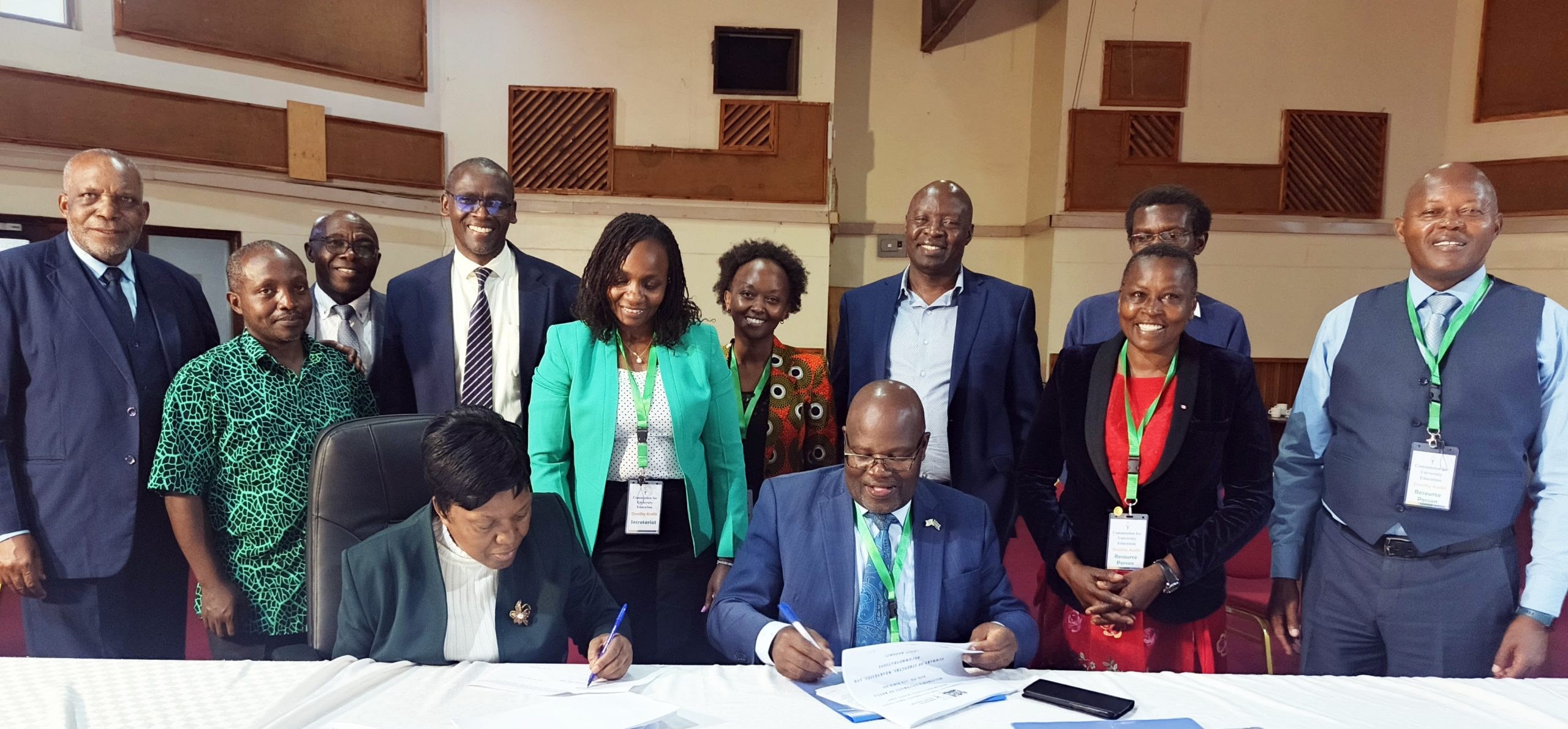
Commission for University Education (CUE) and Multimedia University of Kenya (MMU) top management have signed an exit report, marking a successful conclusion of a Regular Institutional Quality Audit that started on Monday, March 9, 2026.
The audit assessed several key areas including stakeholder requirements, governance and management of the university, core academic activities, quality assurance systems, physical facilities and utilities, institutional achievements, stakeholder satisfaction, as well as university colleges, campuses, collaborations and partnerships.
Speaking during the exit meeting, audit team chairperson Prof. Maurice Okoth said the report outlines strengths, weaknesses and recommendations identified during the review, which will guide the institution in improving its services.
“The exit report gives the strengths, weaknesses and recommendations that the Commission for University Education was able to identify. This will go a long way in improving services that the university offers to students, how they handle human resource, among other areas,” he said.
Prof. Okoth emphasized that the audit process is meant to support continuous improvement rather than punishment, noting that implementation of the recommendations will help the university move to the next level.
“Like we had mentioned, this is not punitive in any way. When the university implements the recommendations, it will move to the next level. We look forward to working together over the next five years to see the progress made,” he added.
He also noted that as a public institution, MMU faces high expectations from students, alumni and other stakeholders who are keen on seeing the institution grow.
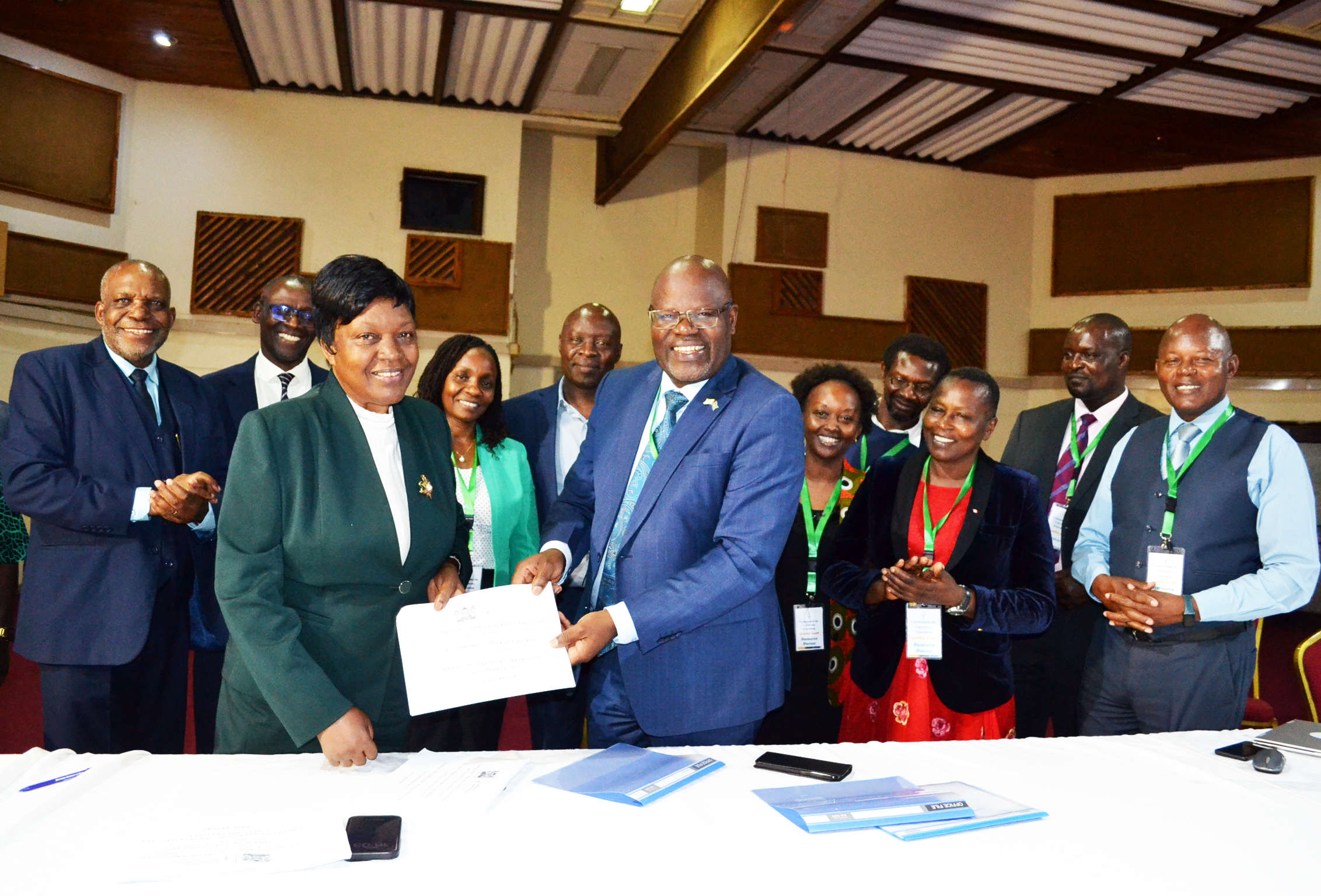
In her remarks, MMU Vice Chancellor Prof. Rosebella Maranga expressed appreciation to the audit panel for their professionalism, dedication and constructive engagement throughout the exercise.
Prof. Maranga said the audit process was valuable and insightful, adding that the observations and guidance provided by the audit team will help the university strengthen its internal systems.
“The professional observations and guidance provided will greatly assist the university to enhance its internal processes, governance, quality of teaching, innovation and service delivery,” she said.
She noted that the recommendations highlighted areas requiring improvement and reaffirmed the university’s commitment to continuous improvement and compliance with the universities Standards and Guidelines.
Prof. Maranga added that the university looks forward to receiving comprehensive audit report, and continuing its collaboration with the CUE in advancing quality of higher education in Kenya.
The institutional quality audit is conducted every five years as provided for in the Universities Act to assess compliance with national standards, guidelines and regulations. The previous audit at MMU was conducted in 2019.
MMU Ag. Director, Quality Assurance Dr. Martin Magu said the audit process began last year when the university conducted and submitted its Self-Assessment Report (SAR) to the CUE in July 2025.
Dr. Magu, whose directorate coordinated the audit activities, revealed that it is on the backdrop of the submission of the report that the CUE assembled a team of experts to carry out a site inspection at the university, examine documentary evidence and institutional processes to validate the report.
During the exercise, the audit team interviewed a wide range of stakeholders including the Council, University Management Board, Senate, academic staff, non-teaching staff, students, student leaders, alumni, service providers, off-campus hostel owners and local administrators.
CUE is expected to issue a detailed final report on the audit by the end of March 2026.
By Nicanor Ndiege