
The Faculty of Media and Communication is one of Kenya’s leading providers of practice-based education in media, communication, film, animation, graphic design, and advertising. Built on academic excellence and hands-on professional training, the Faculty comprises two departments—the Department of Journalism and Communication and the Department of Film and Broadcast Production—offering distinct yet interconnected pathways into the media and creative industries. The Faculty is also home to Kenya’s first and only degree programme in Film Production and Animation, a milestone that reflects its pioneering commitment to advancing media education in the region.
The Faculty offers qualifications from certificate to PhD level, catering to diverse learner needs and career aspirations. Programmes span a Certificate in Mass Communication; Diplomas in Journalism, Strategic Public Relations, and Film Production and Animation; and undergraduate degrees including the Bachelor of Journalism, Bachelor of Applied Communication, Bachelor of Film Production and Animation, and Bachelor of Animation and Graphic Design. At postgraduate level, students may pursue a Master’s in Journalism and Media Studies, a Master’s in Corporate Communication, or a PhD in Communication and Media Studies. Short professional courses in animation, video production, graphic design, photojournalism, and Strategic Communication in the Digital Age ensure that practitioners at every career stage can access current, industry-relevant skills.
Central to the Faculty’s identity is its investment in world-class facilities that immerse students in a genuinely professional working environment. These include multimedia PCs, professional television cameras, and state-of-the-art audio-visual recording, editing, and post-production suites. MMU 99.9 FM, the Faculty’s campus radio station, broadcasts around the clock and serves as a live training ground where students produce and present their own programmes. A fully equipped television studio supports further practical learning, and the Faculty’s own television station is set to launch soon. Students also produce a magazine and short films, graduating with a tangible portfolio of real-world media work.
The Faculty’s curriculum is fully responsive to the digital transformation reshaping the media industry. Students are trained in multimedia storytelling, data journalism, online publishing, and digital content strategy, equipping them to work fluidly across platforms and formats. The social media revolution receives particular attention, with coursework covering content verification, audience analytics, brand communication, influencer dynamics, and crisis communication in the digital age. Artificial intelligence is integrated across programmes as both a practical tool and a subject of critical inquiry, with students engaging with AI-assisted writing and editing, automated journalism, natural language processing, and AI applications in film and animation pipelines. The ethical dimensions of these technologies—including bias, intellectual property, accountability, and synthetic media—are central to this training. The aim is to produce graduates who not only use these tools competently, but who understand their implications deeply enough to apply them responsibly and help shape the standards that will govern their use.
The Faculty is supported by a team of experienced staff who combine academic expertise with active industry engagement—researchers, practitioners, and innovators committed to teaching that is current, relevant, and grounded in professional realities. Whether a student aspires to become a journalist, documentary filmmaker, graphic designer, animator, social media strategist, corporate communications director, or an AI-literate media innovator, the Faculty of Media and Communication provides the environment, the expertise, and the resources to make that ambition a reality.
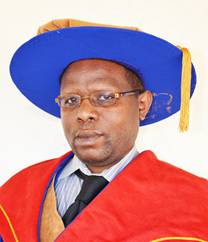
Dr. Isaac Mutwiri, PhD