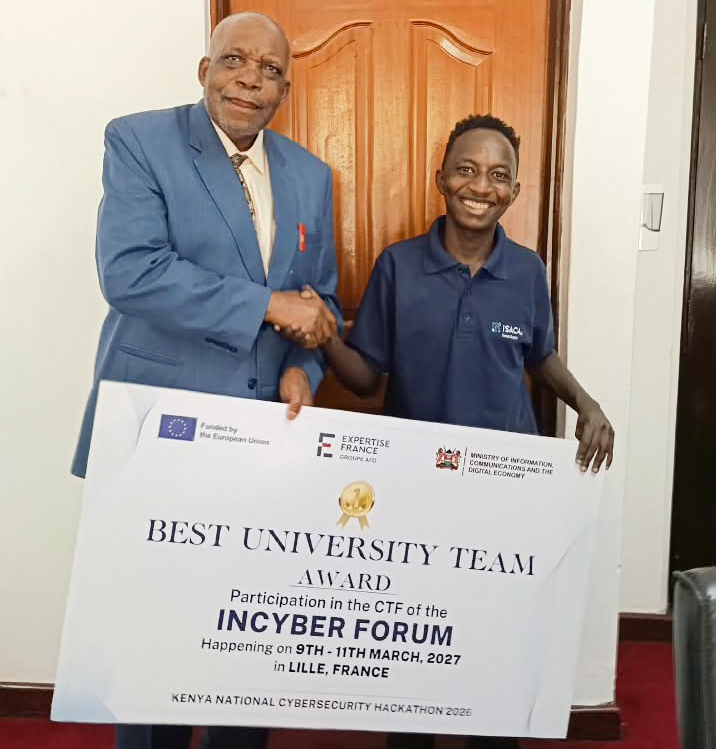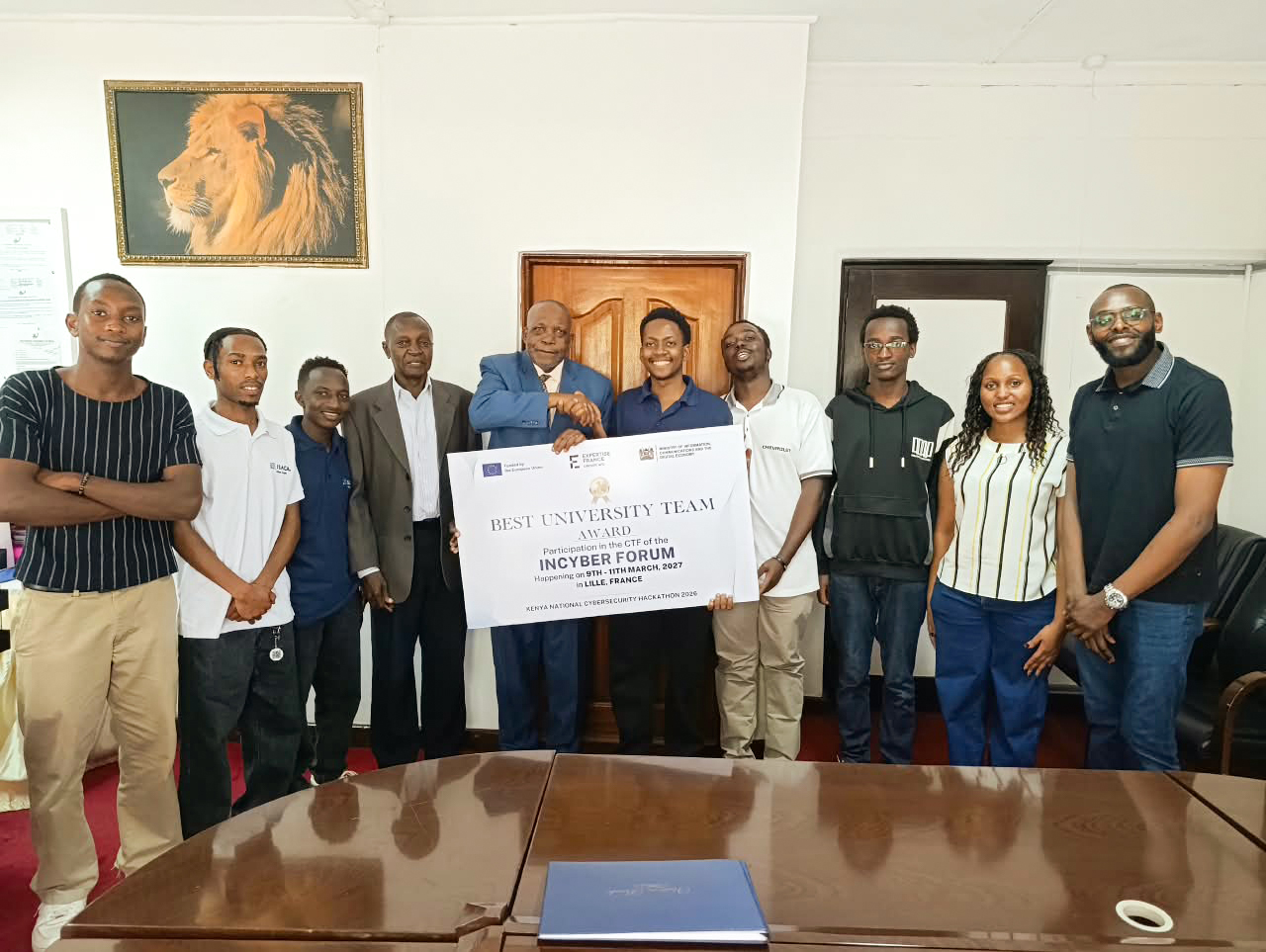
As cybersecurity threats continue to evolve in scale and sophistication, Multimedia University of Kenya (MMU) students have demonstrated growing capacity of local universities to develop talent capable of safeguarding the digital space.
The university’s Faculty of Computing and Information Technology cybersecurity team, emerged best at Kenya National Cybersecurity Hackathon 2026, held in October at KICC and will represent the country at INCYBER Forum 2027 in Lille, France.
The win comes at a time when Kenya is experiencing a significant increase in cyber threat activity, with a July–September 2026 Cybersecurity Report by the National Kenya Computer Incident Response Team Coordination Centre (National KE-CIRT/CC), revealing that more than 2.6 billion cyber threat events were detected in the country during the three-month period, representing a 14.45 per cent increase compared with April–June of the same period.
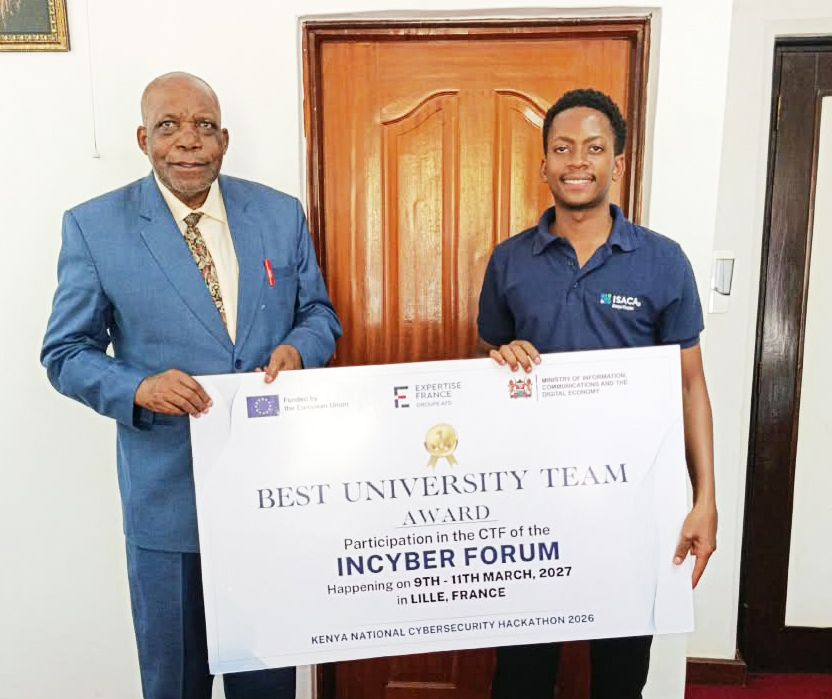
Speaking during a meeting with the students, MMU Deputy Vice Chancellor, Academic Affairs, Research and Innovation Prof. Livingstone Ngoo noted critical role of information technology in shaping the country’s future, urging the students to continuously up-skill their knowledge in response to rapidly changing technological environment.
“Information technology is the way forward. Way back in 2000, you would say you must learn your specialisation in IT. These days, we no longer talk about it. We say you must learn IT,” said Prof. Ngoo.
He observed that technological advancement, particularly in Artificial Intelligence, is transforming how problems are understood and resolved, urging the students not to limit themselves to their current areas of specialisation.
Dean, Faculty of Computing and Information Technology, Prof. Moses Odeo, said there is need to strengthen university-industry partnerships to expose students to practical experiences and professional opportunities.
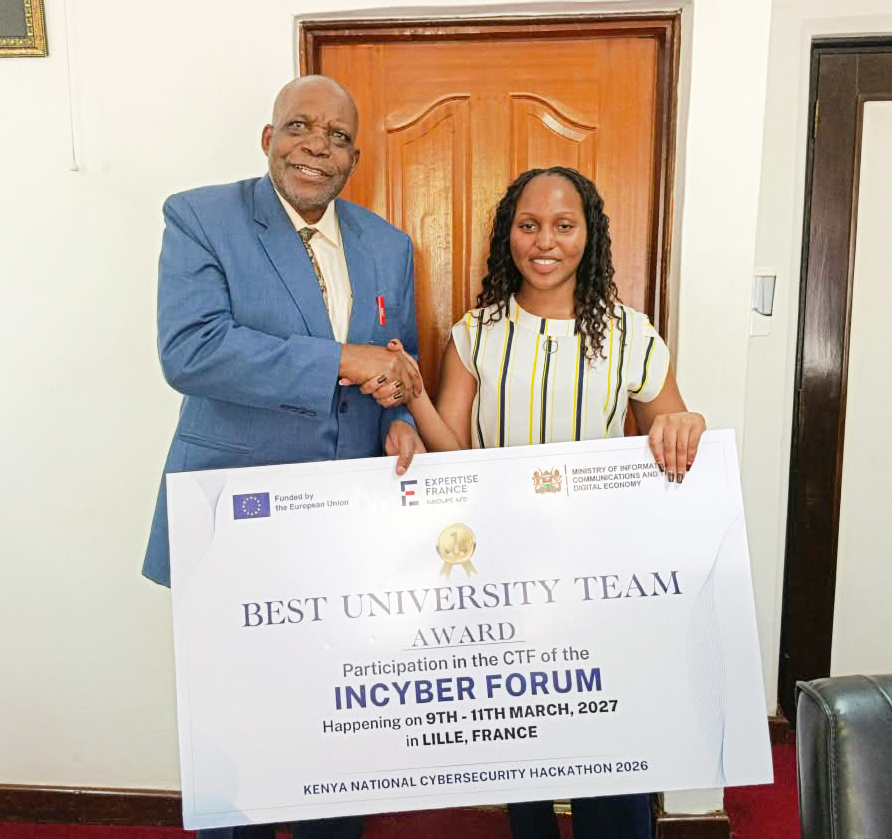
He encouraged the students to maintain their relationship with the university even after graduation, noting that MMU has established an alumni office to facilitate continued engagement and collaboration between graduates, the university and industry.
Prof. Odeo said the university is exploring partnerships with technology companies, including Huawei and Amazon Web Services (AWS), to facilitate specialised training, professional certifications, internships and industrial attachments.
He said that formal partnerships through Memoranda of Understanding (MoUs) and Memoranda of Agreement (MoAs) will help create structured opportunities for students to gain industry experience and interact with professionals working in the technology sector.
“We need to continue working together to see how we can have more of those opportunities,” said Prof. Odeo, adding that stronger institutional linkages will help prepare students for practical demands of the job market.
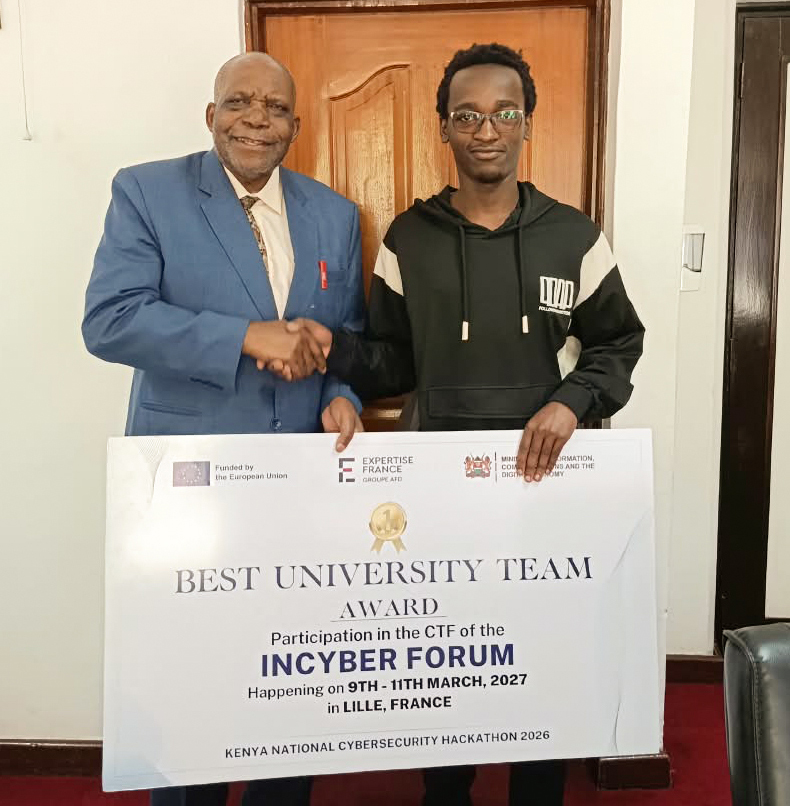
The team’s patron, Mr. Geoffrey Manoti, said the introduction of Bachelor of Science in Cybersecurity and Computer Forensics programme is already playing a significant role in equipping students with both theoretical and practical skills needed to address real-world challenges in an era increasingly characterised by cyberwarfare.
On his part, the students’ team-lead Samuel Gachora expressed appreciation to the university management and the Faculty for their support, particularly by facilitating access to laboratories for practical training.
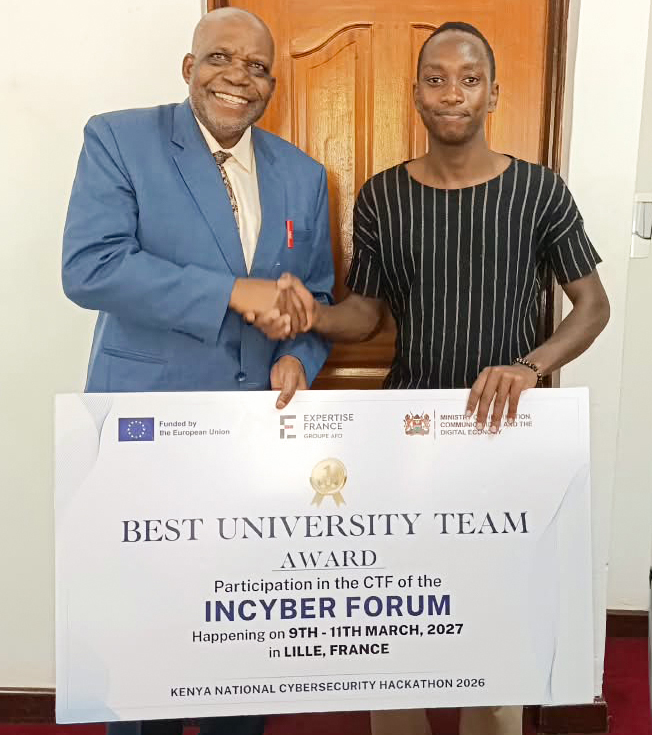
Gachora who was accompanied by other team members, comprising Reuben Kanyoko, Amos Maina and Kevin Kibet, revealed that MMU’s cybersecurity community has grown to more than 200 members, demonstrating increasing student interest in cybersecurity and importance of nurturing talent from early stages of university education.