
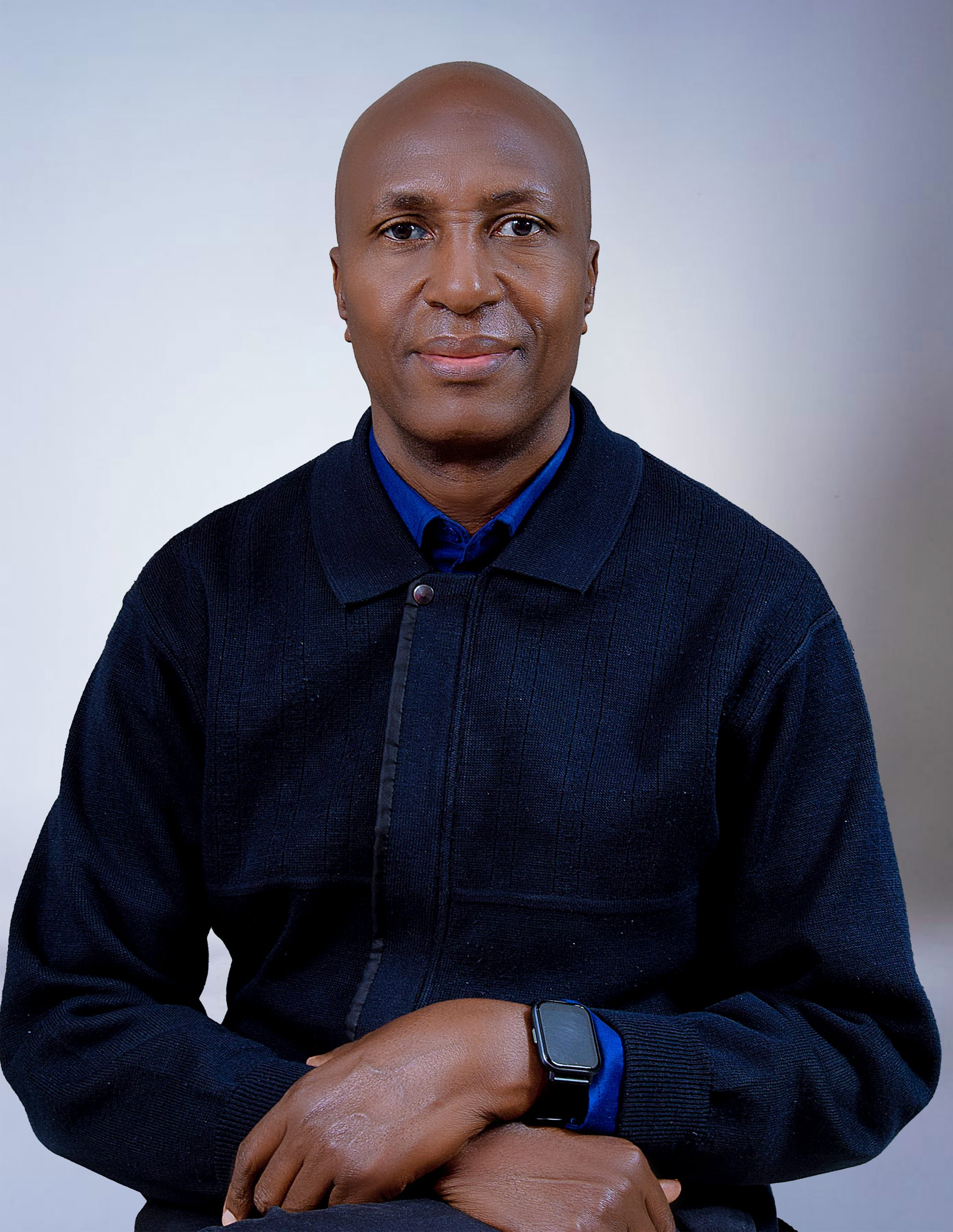
Dr. Collins Auta Wagumba is a communication scholar, consultant, and researcher with over 20 years of experience in academia, media, and professional training. He is a Senior Lecturer in Broadcast Productions and Chair of the Department of Journalism and Communication at Multimedia University of Kenya. A former Hubert Humphrey Fellow at the University of Maryland, USA, he brings global expertise in radio and television production to his teaching and consultancy work.
His research focuses on digital engagement, visual communication, and audience-centered messaging, with publications in peer-reviewed journals and presentations at international conferences. Dr. Wagumba has successfully led grant-funded projects, including training programs supported by the Volvo Research and Educational Fund (VREF), aimed at enhancing communication of mobility and access research across Africa. He is also a trusted consultant for institutions such as Farm Concern International, Nation Media Group, and UNDP, specializing in strategic communication, training, and content production.
Academic Qualifications
Doctor of Philosophy (PhD) in Communication and Information Studies – University of Nairobi
Master of Arts in Communication Studies – University of Nairobi
Hubert Humphrey Fellowship Programme – University of Maryland, USA
Bachelor of Arts in Communication and Sociology – University of Nairobi
Diploma in Mass Communication – Kenya Institute of Mass Communication (KIMC)
Research Interest
Digital Engagement and Visual Communication
Audience-Centered Messaging
Mobility and Access Communication in Africa
Recent Publications
Chege, M. W., Wagumba, C. A., & Baya, S. Y. (2025). Examining radio as a tool for facilitating marital reconciliation: Case of Patanisho segment on Radio Jambo Kenya. International Journal of Multidisciplinary Research and Publications, 8(3), 184–191. https://doi.org/10.5281/zenodo.
Chesire, J. J., Wagumba, C., & Njeru, A. (2025). Enhancing corporate governance through digital communication tools: A case study of Wama Hospital, Kenya. International Journal of Recent Advances in Multidisciplinary Topics, 6(8). https://www.ijramt.com
Francis, M. M., Wagumba, C., & Ndungu, V. W. (2025). Exploration of TikTok’s masculinity representations in influencing gender attitudes among selected Kenyan male youths in Nairobi County. International Journal of Recent Advances in Multidisciplinary Topics, 6(6). https://www.ijramt.com
Kwamboka, J., Kigatiira, K., & Wagumba, C. A. (2024). The influence of Instagram stories on career paths of female journalism graduates of Multimedia University of Kenya. International Journal of Research in Engineering, Science & Management (IJRESM), 7(X). ISSN: 2581-5792.
Wagumba, C., & Mwangi, M. (2021). Television executives: Balancing audiences’ needs and producers’ expectations in serial drama programming of the digital era in Kenya. Journal of Communication and Media Research, 13(2), 72–82.
Wagumba, C., & Mwangi, M. (2021). Re-visiting TV soap opera viewership in a changing broadcasting dispensation in Nairobi. Kabarak Journal of Research & Innovation, 11(3), 221–228.
Wagumba, C., & Mwangi, M. (2020). Determining the context of television serial drama viewership in Nairobi, Kenya. Editon Consortium Journal of Media and Communication Studies (ECJMCS), 2(1).
Wagumba, C., & Mwangi, M. (2020). Balancing audiences’ needs and producers’ expectations in serial drama programming in the digital era. Jurnal Komunikasi Islam Indonesia.
Mutunga, M., & Wagumba, C. A. (2019). Developing broadcasting industry through glocalization and hybridization. Jurnal Komunikasi Islam, 9(1). ISSN: 2088-6314.
Wagumba, C. A., Mwangi, M., & White, R. (2019). Local or foreign? The genesis of preferring foreign productions over local TV serial drama fictions in Kenya. The International Journal of Humanities & Social Studies, 7(11). https://doi.org/10.24940/theijhss/2019/v7/i11/HS1911-060
Wagumba, C. A. (2018). The battle of television remote control: Emerging trends in the wake of digital transmission in Kenya. Scholars Journal of Arts, Humanities and Social Sciences, 6(8), 1582–1587. https://doi.org/10.21276/sjahss.2018.6.8.26
Contacts:
Email Address: cwagumba@mmu.ac.ke