
Multimedia University of Kenya (MMU) is undertaking a strategic two-day training workshop on pedagogy and andragogy aimed at equipping academic staff with skills and knowledge required to implement Competency-Based Education and Training (CBET) as the university prepares for curriculum review and alignment.
Speaking during the official opening of the workshop, Deputy Vice Chancellor, Academic Affairs, Research and Innovation, Prof. Livingstone Ngoo, said the training is a strategic intervention that reflects the global shift from content-driven education to competency-driven learning.
He said that employers today increasingly value what graduates can do rather than merely what they know, stating the need for universities to produce graduates equipped with practical skills, critical thinking abilities, innovation, ethical values and problem-solving competencies.
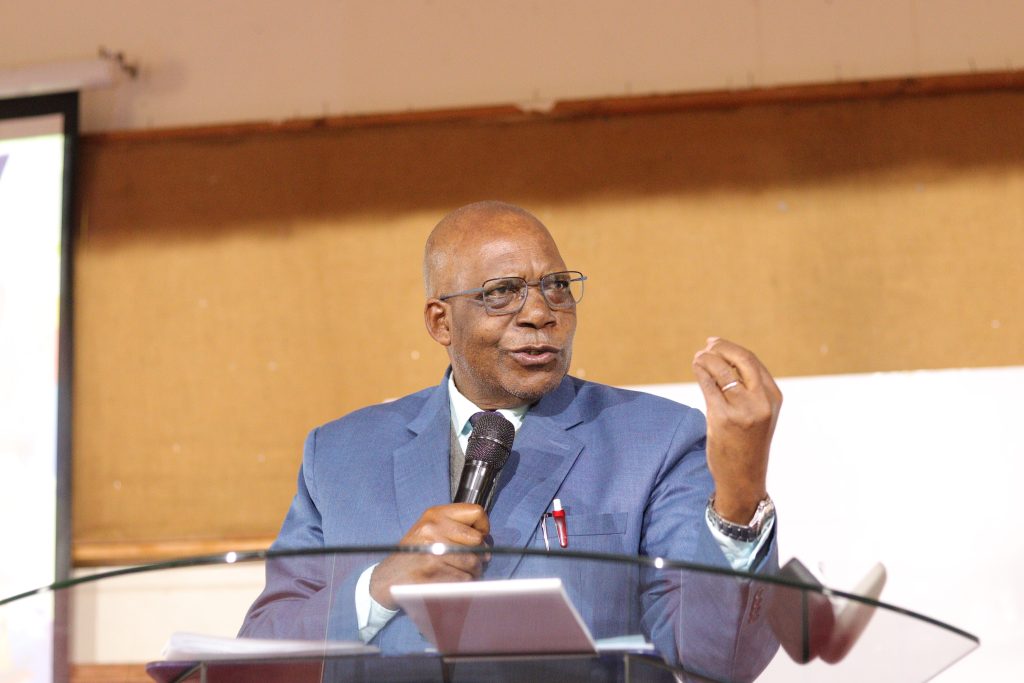
“Our role as educators is to ensure that graduates not only possess knowledge, but also practical skills, professionalism and the ability to solve real-world problems. We must inspire students to think beyond identifying problems and empower them to find solutions within their environments,” said Prof. Ngoo.
Prof. Ngoo further challenged academic staff to embrace learner-centred approaches, technology-enhanced teaching and the responsible use of Artificial Intelligence while maintaining that human judgement and common sense must always remain paramount in educational practice.

He also stressed that successful implementation of competency-based education requires collaboration across the entire university ecosystem, including academic departments, library services, ICT units, quality assurance offices and industry partners.
In his remarks, Director, Quality Assurance, Dr. Martin Magu, said the training marks another significant milestone in MMU’s journey towards fully implementing a competency-based curriculum, following an earlier sensitization exercise.
Dr. Magu said that because universities across the country are preparing to admit first cohort of CBET learners in 2029, capacity building for academic staff remains a critical priority.

“Curriculum transformation can only succeed when academic staff are adequately prepared to design, deliver and assess learning using learner-centred approaches. We are moving from the traditional model where the teacher knows it all to one where lecturers facilitate learning and guide students in demonstrating competencies,” he said.
The two-day training exercise focuses on four key areas central to effective CBET implementation: curriculum alignment and competency-based instruction, learner-centred pedagogical and andragogical approaches, competency-based assessment and feedback, and technology-enhanced teaching and quality assurance.

The training being coordinated by Directorate of Quality Assurance, is facilitated by Prof. Rosemary Imonje, an Associate Professor of Education at the University of Nairobi, and Prof. Violet Opata, an Associate Professor of Educational Communication and Technology.